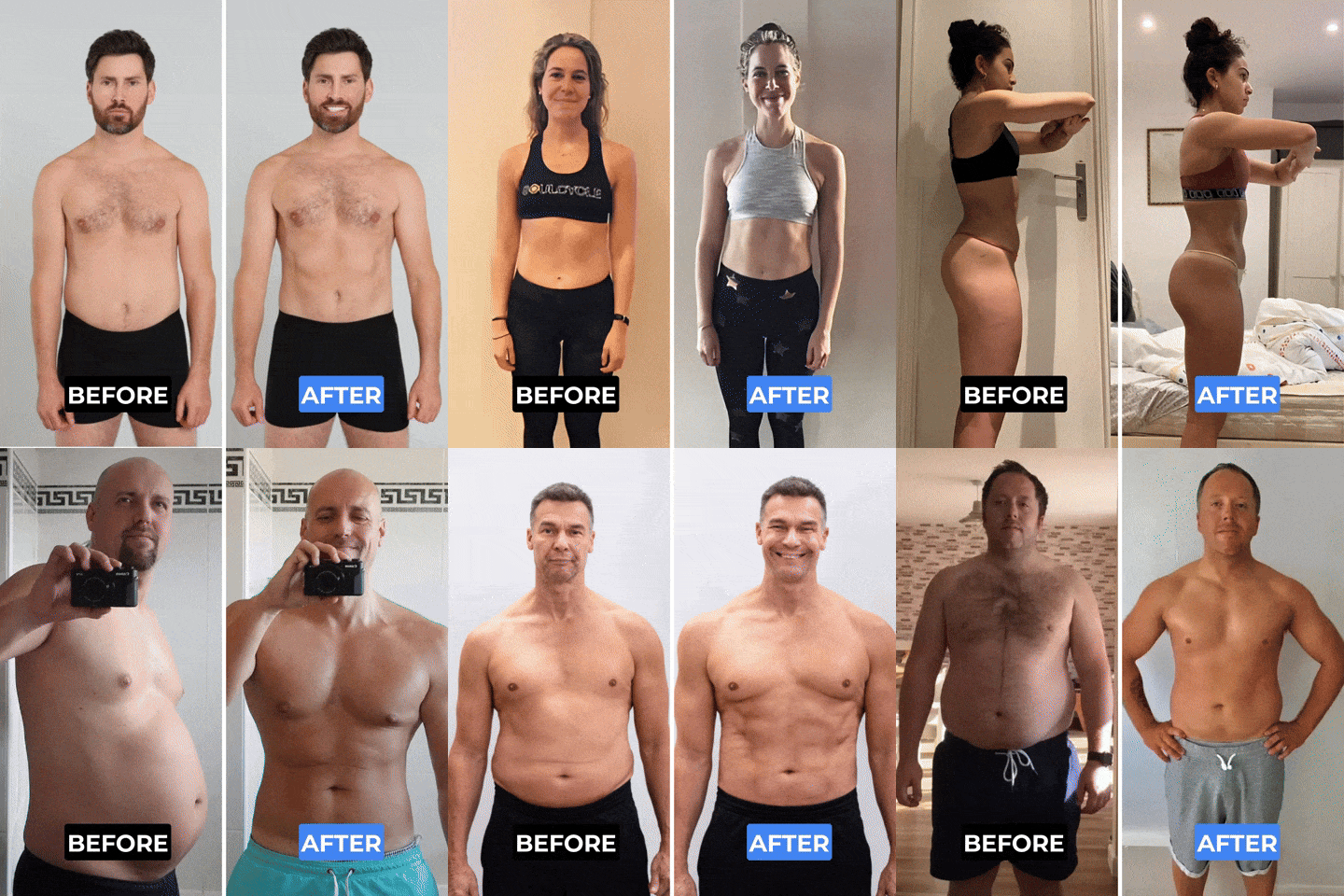
Sports Journalist: "The Pro Athletes With the Most Toned Abs Don't Do Crunches. They Strap This Device On for 20 Minutes a Day Instead."

I'll be the first to admit — I didn't see this coming.
I've been covering professional sports for fourteen years. NFL locker rooms, Olympic training facilities, MMA fight camps. I've watched some of the fittest people on the planet prepare their bodies for competition.
One thing always nagged me: the athletes with the most visible, year-round midsections weren't the ones grinding out crunches. Some barely did direct ab work at all.
For years I assumed it was just genetics — elite DNA, favorable muscle insertions, the kind of thing you're either born with or you're not.
Then I started asking around. Not casually — as a reporter. And what I found completely changed how I think about core training.
It wasn't a workout trick. It wasn't a diet secret. It was a technology that's been used in sports medicine and clinical rehab for decades — one that the general public has almost no idea exists.
Here's what I found.
The Pattern I Couldn't Ignore

I first noticed it covering an NFL training camp three years ago.
The players with the sharpest midsections — the ones who looked cover-ready year-round — weren't in the ab circuit. They were in the recovery room, wearing devices I'd never paid attention to before.
I saw it again at an Olympic training center. And again visiting an MMA gym. The same pattern every time: the leanest, most defined athletes were spending less time on direct core work than their teammates, not more.
I brought it up during interviews. Most guys shrugged. A few credited genetics.
But when enough people dodge the same question the same way, it stops sounding like nothing — and starts sounding like something they don't want to share.
So I treated it like what it was: a story worth digging into.
The trail led somewhere I never expected.
The Physiology That Explains It

Here's what I didn't know — and I'd bet most people reading this don't either.
Your abdominal muscles have what scientists call a "voluntary recruitment ceiling." When you do a crunch or a sit-up, your brain sends a signal to the muscle. But that signal only reaches a fraction of the fibers that are actually there.
Research shows the average person recruits somewhere between 40 and 60 percent of their available motor units during a standard crunch. The rest of the muscle just sits there — not because you aren't trying hard enough, but because your nervous system literally cannot access them through voluntary effort.
Think about what that means. You could do 200 crunches a day, every day, for years — and never once activate the majority of your core musculature.
This is a neuromuscular limitation, not a fitness one. Your brain has a built-in ceiling on how much muscle it can fire, and no amount of willpower, form correction, or progressive overload breaks through it.
That's when it clicked. The athletes I'd been watching for years — the ones with year-round midsections and minimal ab work — weren't working harder. They were bypassing the ceiling entirely.
The method is easy to explain:
It's a technology called NMES — Neuromuscular Electrical Stimulation. Instead of waiting for your brain to send a contraction signal (which, as we just covered, tops out at partial recruitment), NMES sends the signal externally — through the skin, directly into the muscle.
It activates fibers your nervous system can't reach on its own. Not some of them. All of them.
This has been used in physical therapy, post-surgical rehab, and elite sports performance for over 40 years. The FDA has cleared devices for it. Over 400 clinicians use it in practice right now.
But almost nobody outside of those worlds knows it exists.
What the Machine Does Differently

The Ultra Stimulator is a clinical-grade NMES device you can use at home. One 20-minute session delivers 600+ targeted muscle contractions — the equivalent of over 3,000 crunches, except it's hitting fibers your crunches could never reach.
It's not the same thing as those cheap "ab belts" from late-night infomercials. Those used low-grade EMS that delivered barely a tingle. They were toys that poisoned an entire category.
This is the real version of the technology those products were pretending to be.
And there's a design detail worth pointing out: unlike most consumer stimulators that rely on stick-on gel pads (which dry out, lose adhesion, and need constant replacing), the Ultra Stimulator uses an integrated electrode design — built directly into the belt. No pads to replace. No sticky residue. No degradation over time.
No spinal compression. No hip flexor strain. No joint stress of any kind. You can use it every single day with zero mechanical penalty.
That's why I kept seeing it in recovery rooms and not in the gym. It doesn't compete with the workout — it does something the workout physically can't.
Where This Was Hiding in Plain Sight

If the technology works — and four decades of clinical data says it does — why isn't everyone using it?
I asked myself the same thing. The answer came in three parts.
First: the early consumer products were garbage. Those late-night ab belts gave the entire concept a joke reputation. People heard "ab stimulator" and immediately thought scam. The real technology got buried.
Second: clinical NMES devices cost thousands and required a practitioner to operate. They lived in PT clinics and university sports labs. If you wanted access, you were paying $100+ per session — and you had to keep showing up.
Third — and this is the one that stuck with me — the fitness industry has zero incentive to tell you about this. Gyms sell memberships. Trainers sell hours. Supplement companies sell powder. A device that works in 20 minutes on your couch competes with all of them.
It's not a conspiracy. It's economics. The people who profit from you doing things the hard way have no reason to point you toward a shortcut — even one backed by 40 years of published research.
Pro athletes and their staffs have known about this for years. The only thing that changed is the technology finally made it out of the clinic and into a product normal people can buy.
The Device That Causes Stares

The device is called the NextGen Ultra Stimulator, made by a company called Ape Born.
FDA-cleared. Used by over 400 clinicians through their medical network. 145,000+ units sold.
Here's what you're getting and why it works:
- ✓600+ deep muscle contractions per 20-minute session — hitting fibers your crunches physically can't reach
- ✓Integrated electrode design — no gel pads to replace, no adhesive, no degradation
- ✓FDA-cleared — same regulatory standard as clinical medical devices
- ✓HSA / FSA eligible via TrueMed — pay with pre-tax health dollars, effectively 30–40% off depending on your bracket
- ✓60-day money-back guarantee — full refund if you don't see results
What to Expect, Week by Week
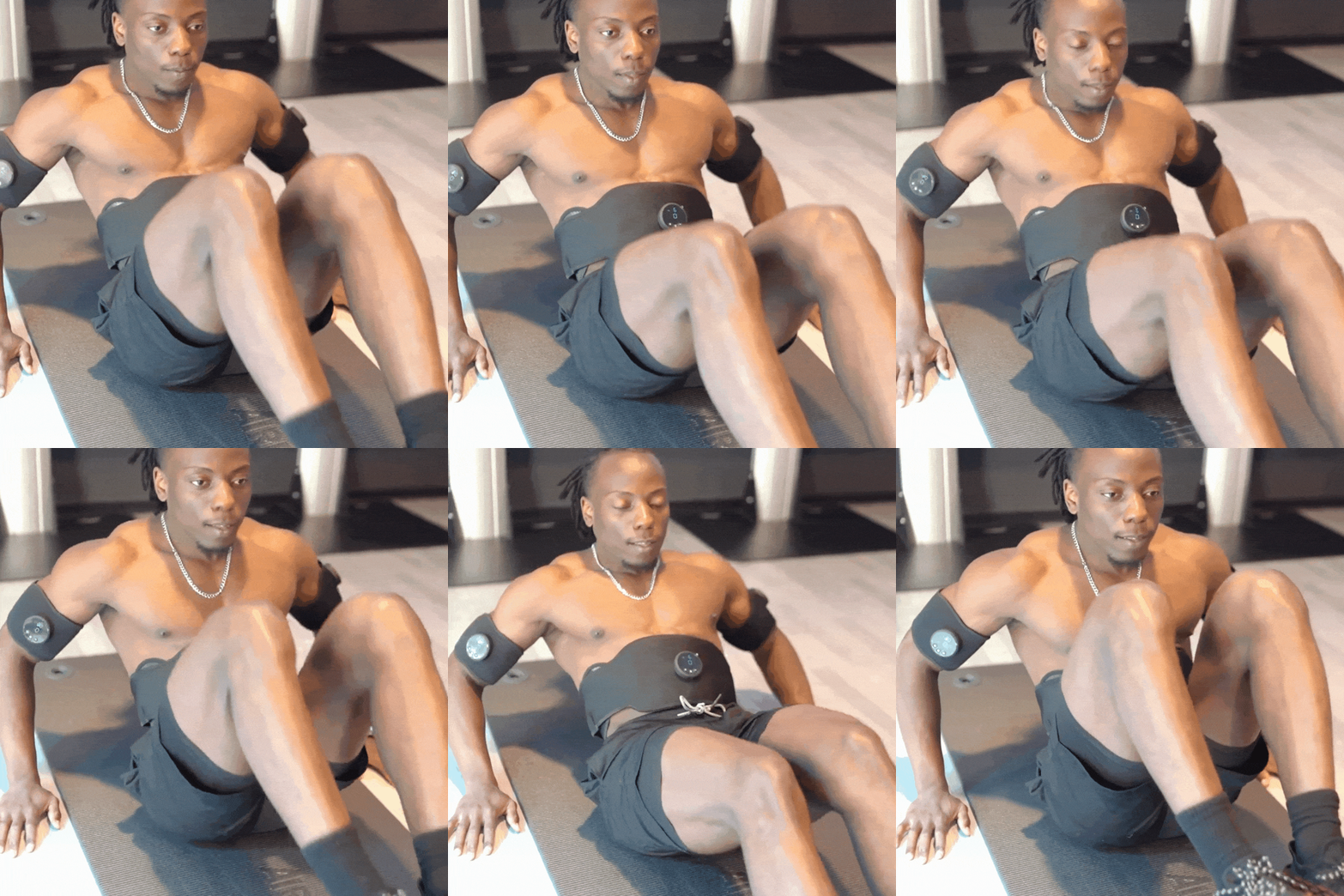
I tested this personally — not as an endorsement, but because the story demanded it.
Weeks 1–2: My core felt noticeably engaged throughout the day — not sore, but "switched on." My posture improved without me thinking about it. The chronic lower-back tightness I carry from years at a laptop eased up significantly. The sessions felt intense but never painful — deep involuntary contractions that were nothing like any ab exercise I've done.
Weeks 3–4: Visible tightening. The soft area below my navel — the spot that never responds no matter how many crunches I do — started firming up. My wife noticed before I mentioned it.
By Week 6+: Real definition. Lines I hadn't seen since my twenties. I changed nothing else — same diet, same training, same lifestyle. The only new variable was 20 minutes a day with the Ultra Stimulator.
This doesn't replace exercise. I still lift, I still run. But this reached a part of my body that fourteen years of consistent fitness never could. And it did it while I sat at my desk.
Don't Just Take My Word For It
Q: Is this just another ab belt gimmick?
A: No. The cheap products from the 2000s used low-powered EMS with almost no real contraction. The Ultra Stimulator is FDA-cleared and uses clinical-grade NMES — the same technology used in physical therapy and pro sports. 145,000+ units sold.
Q: Does it hurt?
A: No. It's intense — your muscles are working hard — but it isn't painful. You control the intensity. Most people start moderate and ramp up over the first week.
Q: Can I use my HSA or FSA?
A: Yes. HSA/FSA eligible through TrueMed. Pre-tax dollars, effectively 30–40% off.
Q: What if it doesn't work for me?
A: 60-day money-back guarantee. Use it daily for two months. If you don't see results, send it back for a full refund.
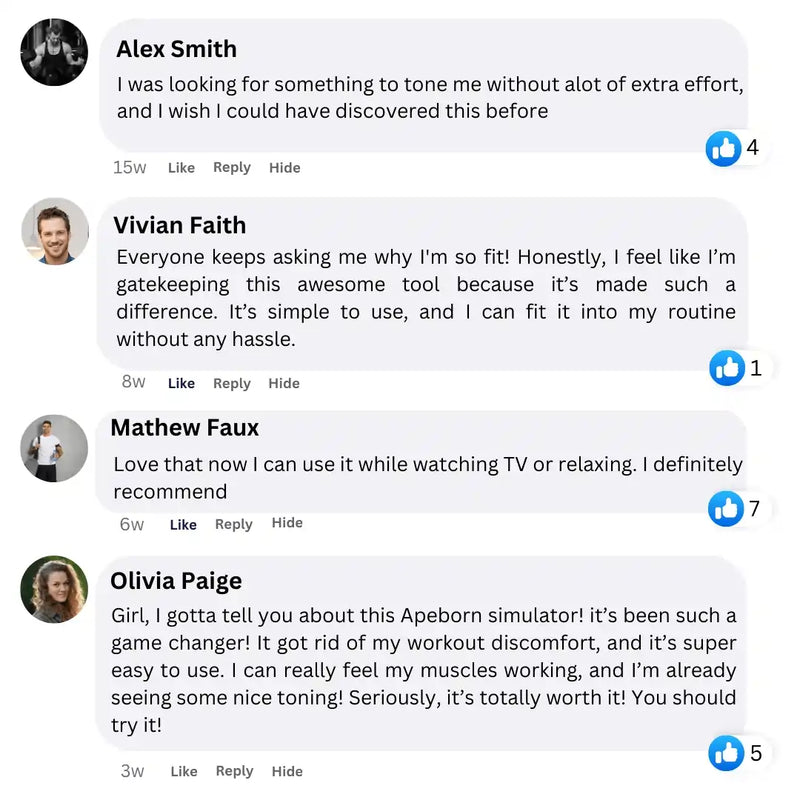
“I recommend this product and this company. I can see my abs getting tighter and my ab muscles are beginning to pop after just two weeks of use. Thank you Ape Born!”
“After six months of using this Stimulator along with a balanced diet, I can honestly say this little device has exceeded my expectations. I've been using it almost daily, mainly on my arms and core, and the results are noticeable!”
“This is my 8 months journey while hitting the gym along with using these stimulators. The best part is it has velcro straps and not the gel pads like others. It surely is expensive than other machines out there but is worth the price.”
Try It the Way a Skeptic Would
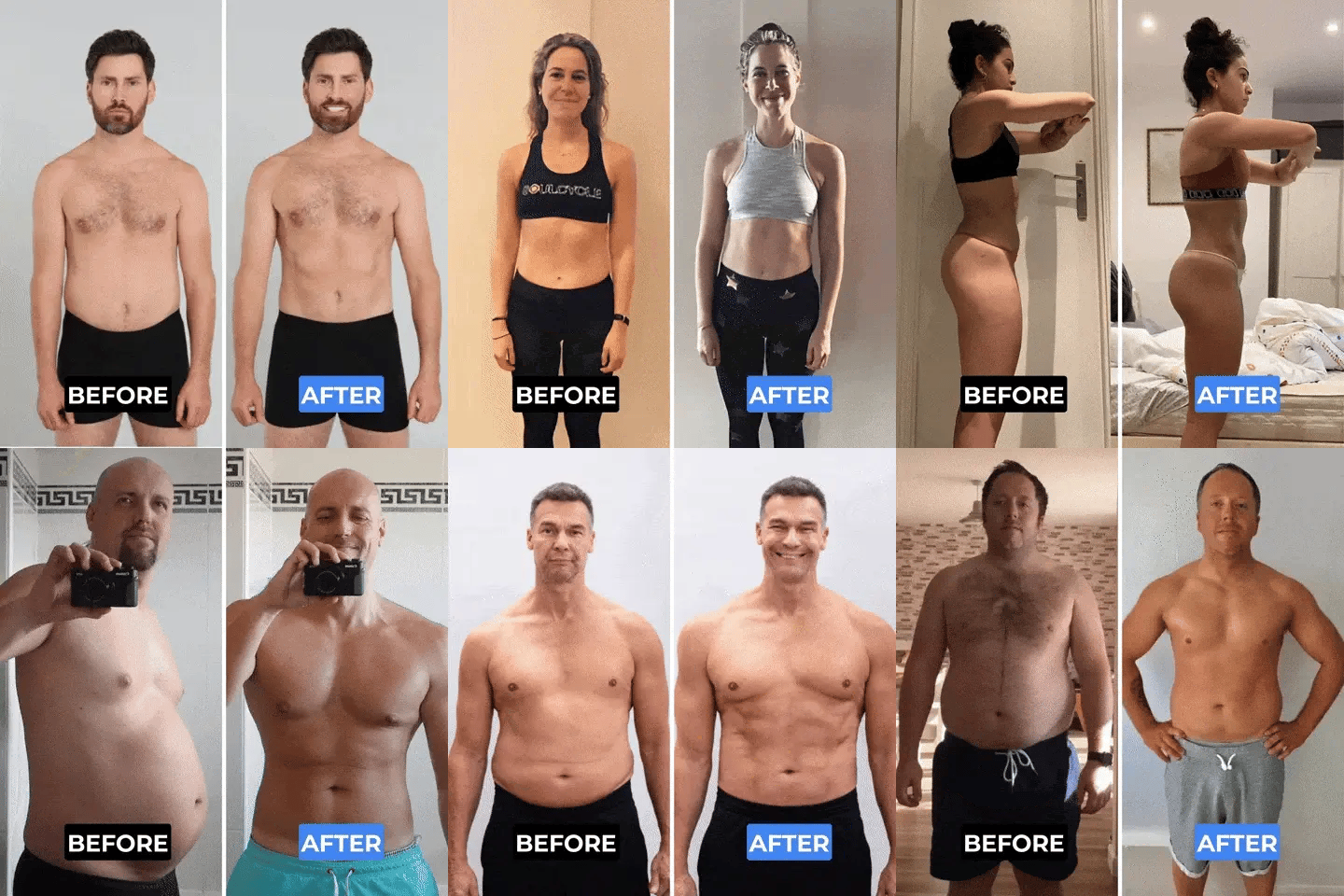
I came into this as a skeptic. Fourteen years of sports journalism teaches you that "revolutionary" usually means "oversold."
But the data is real. The results I experienced are real. And the technology has been validated in clinical settings for over four decades.
94% of users report visible toning within 60 days.
If you've been doing crunches for years and your midsection still doesn't reflect the effort — there's a physiological reason. Your brain can't recruit all of the fibers. NMES can.
The Ultra Stimulator puts 40 years of clinical muscle-activation technology in your hands for a fraction of what a single month of PT sessions would cost.
Try it for 60 days. If it doesn't work, send it back.
Where Can I Get the Ultra Stimulator?
If this story connected some dots for you, here's the last practical piece.
The Ultra is sold only by APE BORN, and you can order it right on this page. Every button here takes you straight to the order section below, where you pick your quantity and check out directly.