How a Clinical Technology That Increases Muscle Strength by 40% Is Giving Women Their Entire Body Back Years After Doctors Told Them to "Just Accept It"

She was three years postpartum and her whole body felt like it belonged to someone else.
Her abs hadn't "come back." The belly still pouched out under every shirt. Her arms shook when she held her toddler at chest height for more than a minute. Her legs burned halfway up the stairs — stairs she used to take two at a time. Her lower back ached by noon, every single day, because her core couldn't stabilize anything anymore and everything else was compensating.
Her doctor told her it was normal. "That's just what happens after kids."
She accepted it — until she didn't.
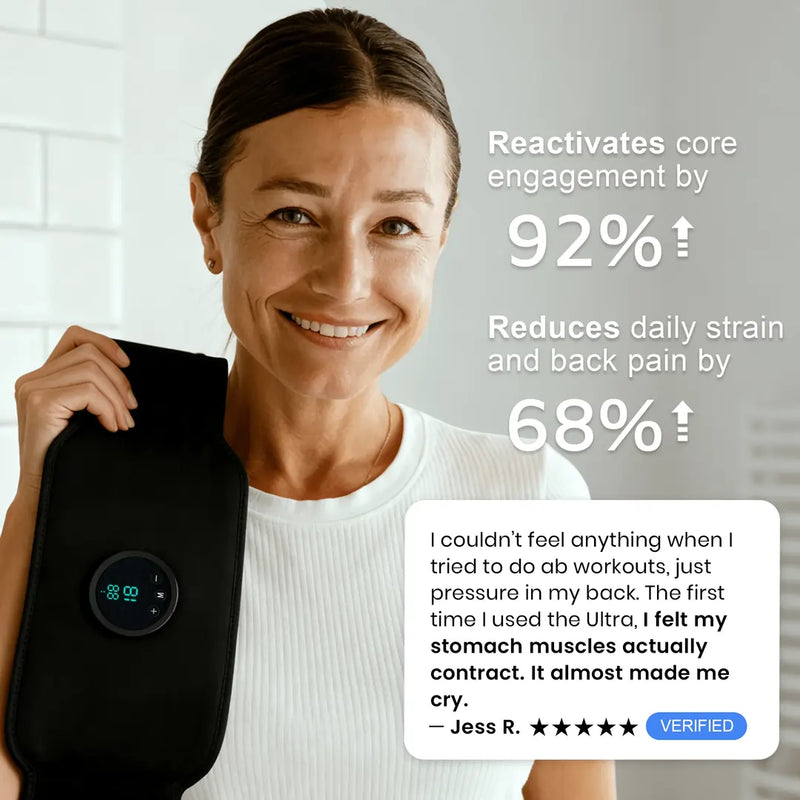
What she found wasn't a workout. It wasn't a wrap. It was a clinical technology originally built for post-surgical muscle rehabilitation — one that forces 600+ involuntary contractions per zone in 20 minutes and has been shown to increase muscle strength by 40% in controlled studies. And it doesn't just target the core. It covers arms and legs — every major area that shuts down after pregnancy.
145,000+ people now use it from their couches.
This is the story of how that technology works, why it was hidden inside clinics for decades, and why postpartum women — some 10 or 15 years past delivery — are calling it the first thing that actually gave them their body back.
The Problem No One Explains After Delivery

Everyone talks about the belly. The diastasis recti. The "mommy tummy." But pregnancy doesn't just disconnect your core — it reshapes how your entire body moves, compensates, and breaks down.
During pregnancy, the rectus abdominis separates. The neuromuscular connection between your brain and your deep core fibers weakens — and in many cases, it doesn't come back on its own. But the damage doesn't stop there.
When your core stops stabilizing your body, everything else picks up the slack. Your lower back absorbs loads it was never meant to carry alone. Your arms fatigue faster because your shoulders and upper back are doing the stabilization work your core used to handle. Your legs feel heavy and weak because without a functioning core, every step, every stair, every squat to pick up a toy on the floor demands more from your quads and calves than it should.
You don't have one problem. You have a cascade that started with one disconnection — your core — and spread to your arms and legs through months and years of compensation.
That's why fixing just the abs was never going to be enough. And it's why the clinical technology that addresses this — Neuromuscular Electrical Stimulation, or NMES — matters across your entire body, not just your midsection.
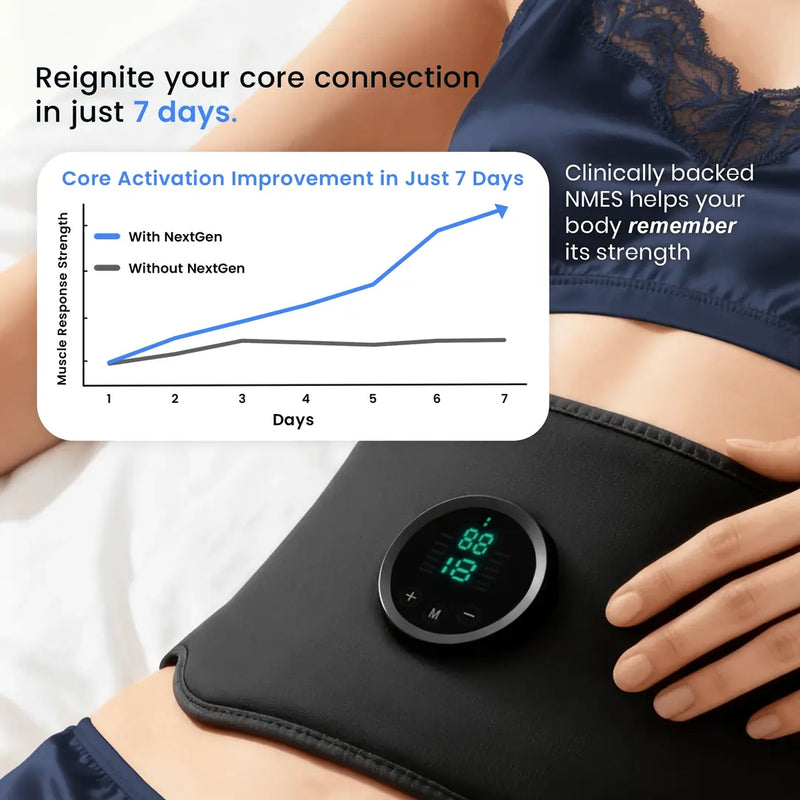
NMES bypasses the brain entirely and sends a signal directly to the muscle, forcing a complete involuntary contraction. In clinical studies, it increased muscle strength by 40%. And until recently, the only way to access it was at a rehab clinic, at $150+ per session — for one area at a time.
Why Everything You Tried Made It Worse — Or Did Nothing

Start with crunches. A crunch asks your rectus abdominis to shorten under load. When that muscle is separated or neurologically disconnected, the force doesn't go where it's supposed to. It pushes into the diastasis gap, spikes intra-abdominal pressure, and loads your lower back. Women who tried crunches to fix their postpartum core often watched their belly cone outward mid-rep. That's the connective tissue failing under a load it can't handle.
But even if crunches didn't make it worse — they only target one area. Your arms and legs don't get touched. The compensation patterns that built up over months of pregnancy and postpartum recovery stay locked in.
The resistance band set? You used it three times. It's behind the stroller. The 5-pound dumbbells don't produce enough stimulus to rebuild arms that have been compensating with the wrong muscle groups for years. The bodyweight leg routines assume your core can stabilize the movement — and it can't yet.
The YouTube "mommy body" routines sit somewhere in between — gentle enough not to cause damage, but too shallow to reach the deep fibers in any zone that actually need activation. They target the surface muscles your brain can still talk to. The ones it can't — in your core, your arms, your legs — never fire.
NMES works on a completely different principle. It doesn't ask the broken connection to perform. It bypasses it. The signal goes directly to the muscle and forces a full contraction — 600+ of them per zone in 20 minutes — hitting deep tissue that no voluntary exercise can reach. That's the mechanism behind the 40% strength increase. Not harder effort. Deeper activation. Across your entire body.
The Technology Was Locked Inside Clinics for Decades

NMES wasn't originally built for postpartum recovery. It was developed for post-surgical rehabilitation — rebuilding muscle activation in patients who'd lost neuromuscular function after operations, injuries, or extended bed rest.
The principle was the same: the brain couldn't talk to the muscle anymore, so the device did it instead. Forced contractions. Deep-fiber recruitment. The 40% strength increase that showed up in clinical studies came from this exact mechanism — complete muscle activation repeated consistently, without relying on voluntary effort.
Physical therapists, sports medicine practitioners, and rehab specialists adopted it. 400+ clinicians through networks like FrontRowMD now recommend it. For years, if you wanted access to clinical NMES, you booked a session at a facility, lay on a table, and paid $150 or more per visit — per zone. Your core one visit. Your legs the next. Your arms another. Weeks of appointments just to cover what pregnancy affected.
For postpartum women with diastasis recti and full-body deconditioning, this created an impossible equation. The technology that could actually rebuild their deep muscle activation existed — across every affected area — but accessing it meant finding childcare, driving to a clinic, and paying per session, per zone, two to three times a week, for months.
The technology that could fix the problem was sitting in a clinic, behind a paywall, while postpartum women at home were buying wraps and doing crunches that only addressed one area — and made even that one worse.
Why the Version You've Seen Is a Toy

If you've tried a cheap EMS belt off Amazon — maybe one marketed for "postpartum toning" or "mommy belly" — you already know how this goes.
It buzzed. It tingled. Maybe it felt like something was happening for a few minutes. Then you put it away and nothing changed.
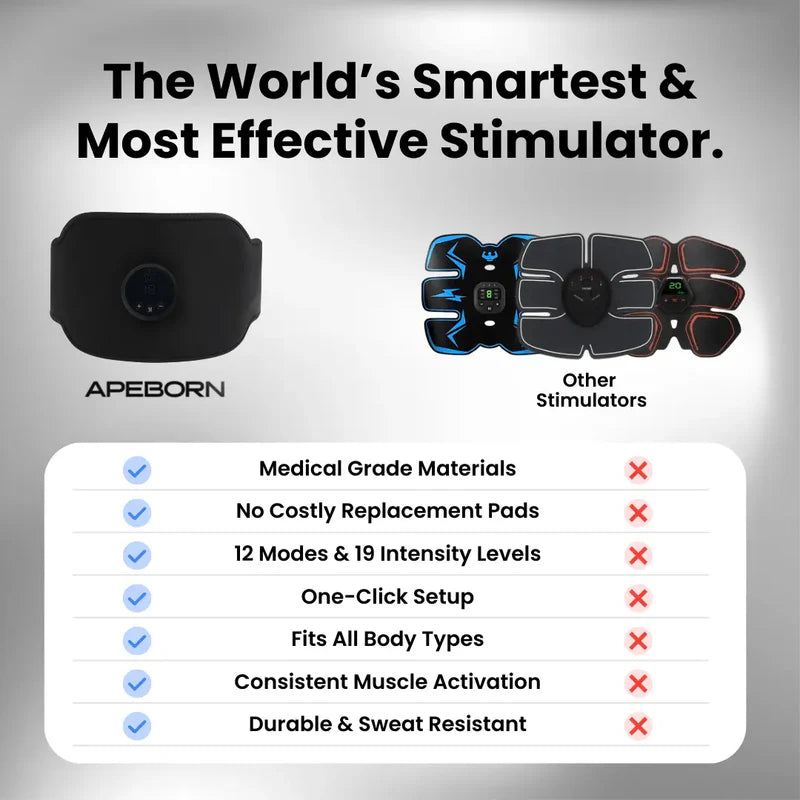
Those devices use flimsy gel pads that lose conductivity after a handful of sessions. The signal barely penetrates past the skin. They're engineered to feel like muscle activation — not to actually produce it. They don't generate the depth of contraction that drives the 40% strength increase in clinical NMES studies. They don't reach the transverse abdominis. They don't rebuild a neuromuscular connection that's been offline since delivery.
And they only cover your abs. Your arms and legs — the areas that have been compensating for a broken core for years — get nothing.
The clinical-grade machines in rehab facilities use integrated electrode technology — direct-contact surfaces that drive the signal deep into the muscle belly. No gel pads. No degradation. No surface-level tingling dressed up as a workout. And in a clinical setting, they cover every zone individually — at $150 per visit, per zone.
That's the version that produces 600+ real contractions per session. That's the version behind the 40% data. And the gap between that version and the $30 Amazon belt is the difference between your body actually coming back and another product in the drawer next to the belly wrap.
The Real Version, Built for Home

FDA-Cleared · 600+ Contractions · 145,000+ Sold
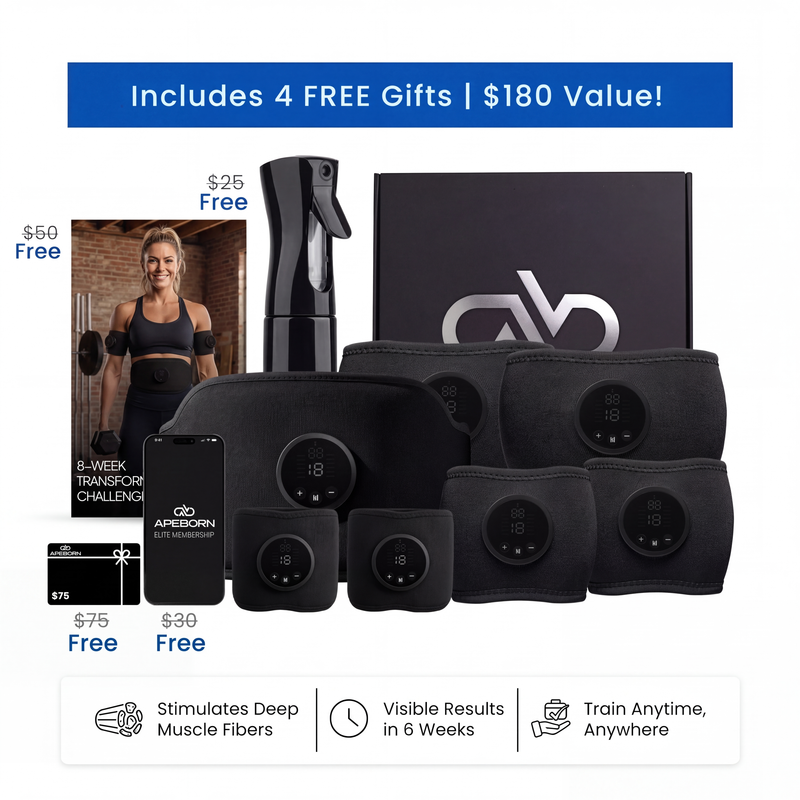
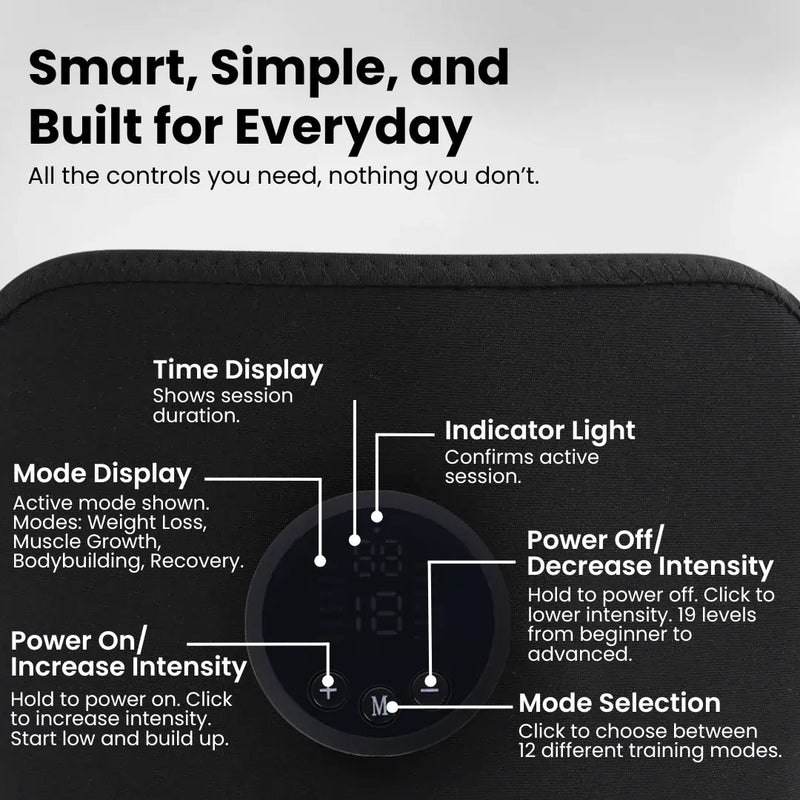
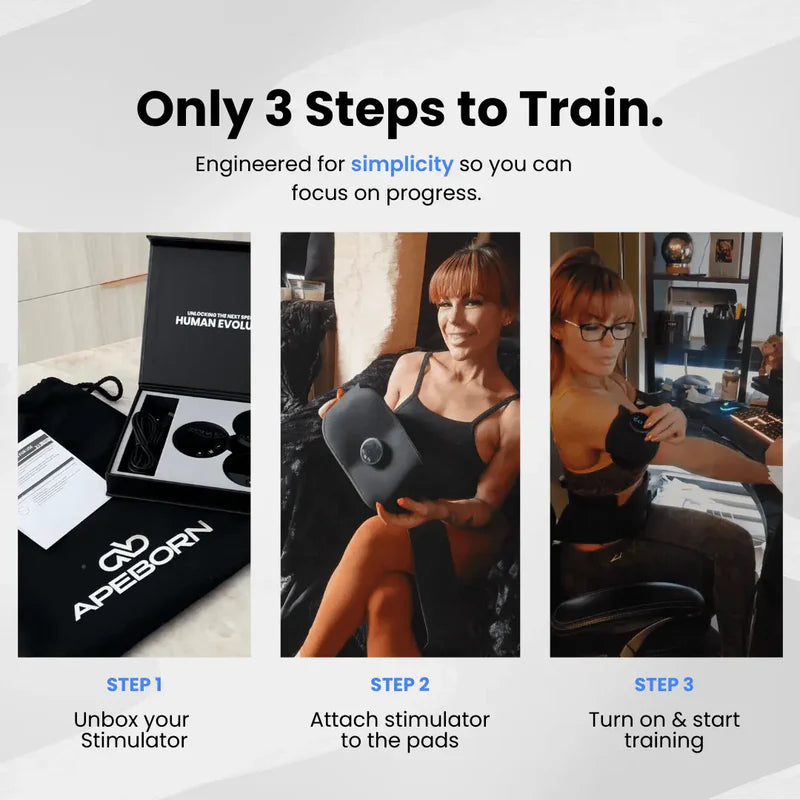
The Ultra Full Body Kit is the first home system that delivers clinical-grade NMES — the same mechanism behind the 40% muscle strength increase — across your core, arms, and legs. Without a clinic visit. Without gel pads. Without a $150-per-session, per-zone price tag.
FDA-cleared. 145,000+ units sold. Recommended by 400+ clinicians. HSA/FSA eligible through TrueMed.
It uses an integrated electrode design — the same type of contact surface used in clinical NMES equipment — not the cheap gel pads that degrade after a few uses. The signal reaches deep tissue in every zone. The contractions are real. 600+ of them per zone in a single 20-minute session, hitting the transverse abdominis, deep arm fibers, and leg muscles that your brain stopped talking to after pregnancy.
This is the technology that was locked inside rehab clinics for decades — one zone at a time, one appointment at a time, one bill at a time. Now it's one system. Every zone your body lost. From your living room. With a 60-day money-back guarantee.
- ✓Full-body coverage — core, arms, and legs — every major area that deconditions after pregnancy, in one system
- ✓Clinical-grade NMES — the same mechanism shown to increase muscle strength by 40% in controlled studies
- ✓600+ deep involuntary contractions per zone in a 20-minute session — reaching deep fibers no crunch, band, or dumbbell can activate
- ✓Integrated electrode design — no gel pads to replace, no adhesive, no degradation, no surface-level tingling
- ✓FDA-cleared — same regulatory standard as clinical medical devices
- ✓145,000+ units sold · recommended by 400+ clinicians through networks like FrontRowMD
- ✓HSA / FSA eligible via TrueMed — pay with pre-tax health dollars
- ✓60-day money-back guarantee — full refund if you don't see results
What to Expect, Week by Week
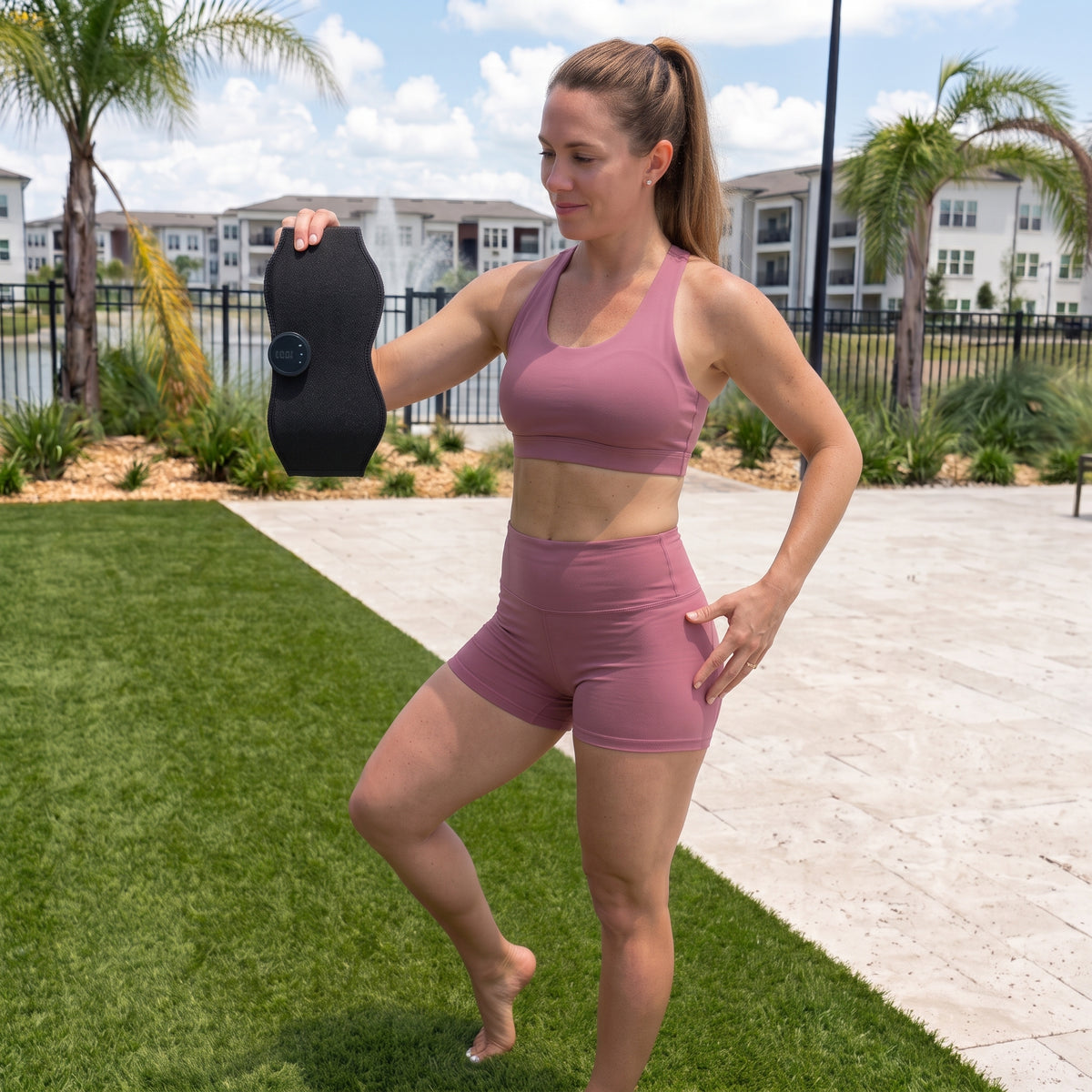
Here's what rebuilding a postpartum body actually looks like — week by week — when the activation reaches everywhere it needs to:
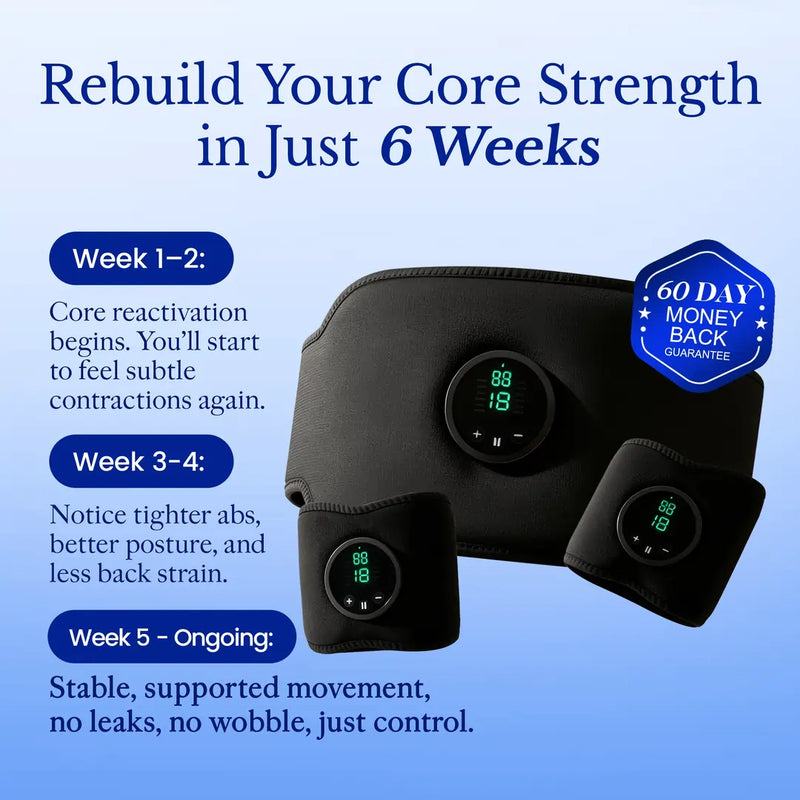
Week 1: Your first session will feel different from anything you've tried. The contractions are involuntary — your muscles fire without you telling them to. Start with your core. The deep abs that haven't engaged since delivery will contract hard. It's strange. It might feel intense. That's the NMES signal bypassing your brain's broken recruitment pathway. Rotate to arms and legs across the week.
Weeks 2–3: Your core starts responding faster. Your arms feel less shaky when you carry your toddler. Your legs stop burning on the stairs. The deep ache after sessions — in every zone — is the same kind of deep-fiber soreness women describe after their best PT sessions. It means the right muscles are finally working.
Weeks 4–6: This is where the 40% mechanism compounds across your whole body. The neuromuscular connections your brain lost after pregnancy start rebuilding — not just in your abs, but in your arms and legs too. Your posture improves because your core is stabilizing again. Your arms engage properly because they're no longer compensating for a broken center. Your legs feel solid because the whole chain is reconnecting.
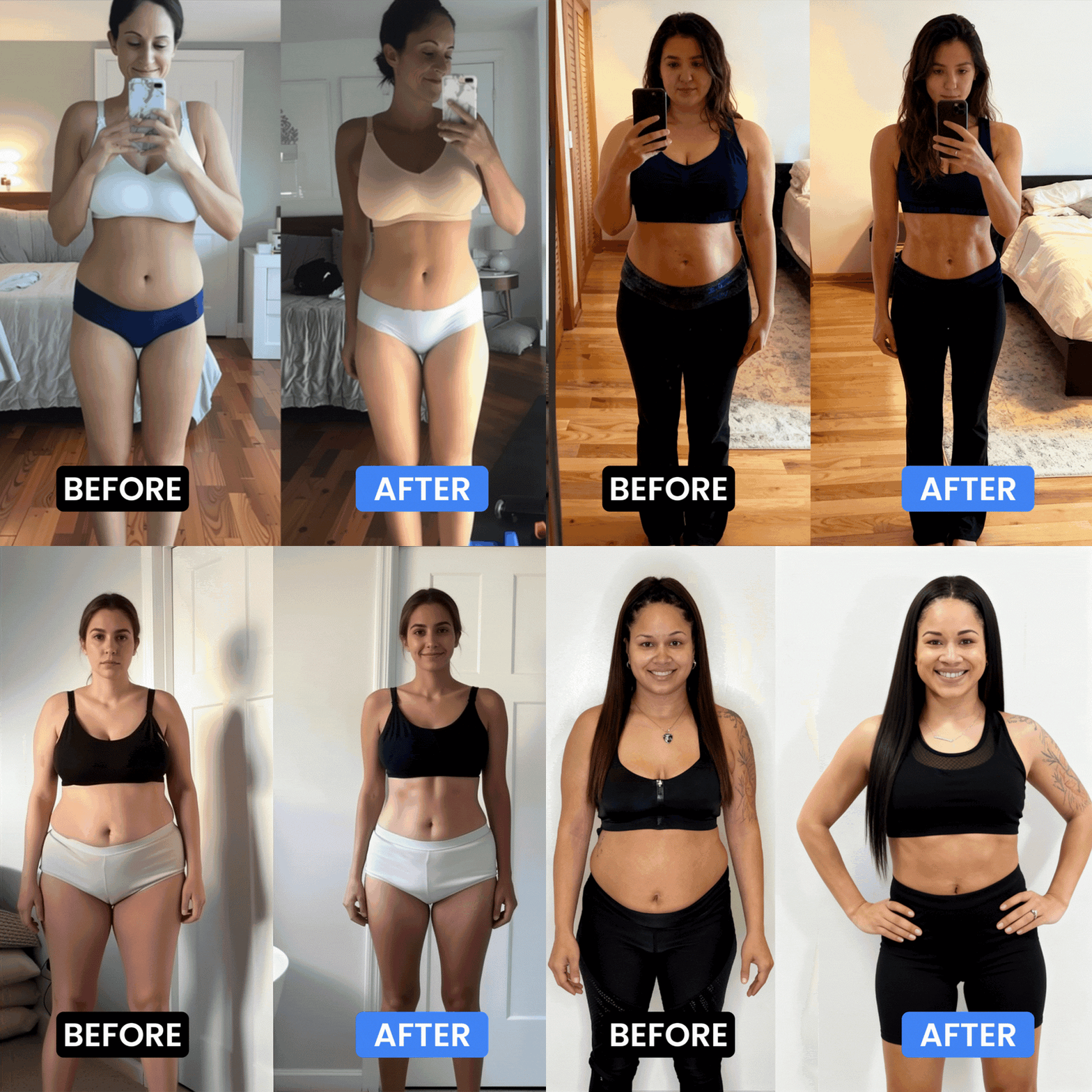
Week 8+: 94% of users report visible toning by day 60. For postpartum women using the Full Body Kit, this often means the belly profile starts flattening, arm definition comes back, and legs feel strong and stable again. Lower back pain drops — because your core is doing its job again and everything else can stop overworking. Not because you trained harder. Because the muscles that disconnected after delivery are finally back online — all of them.
Don't Just Take Our Word For It
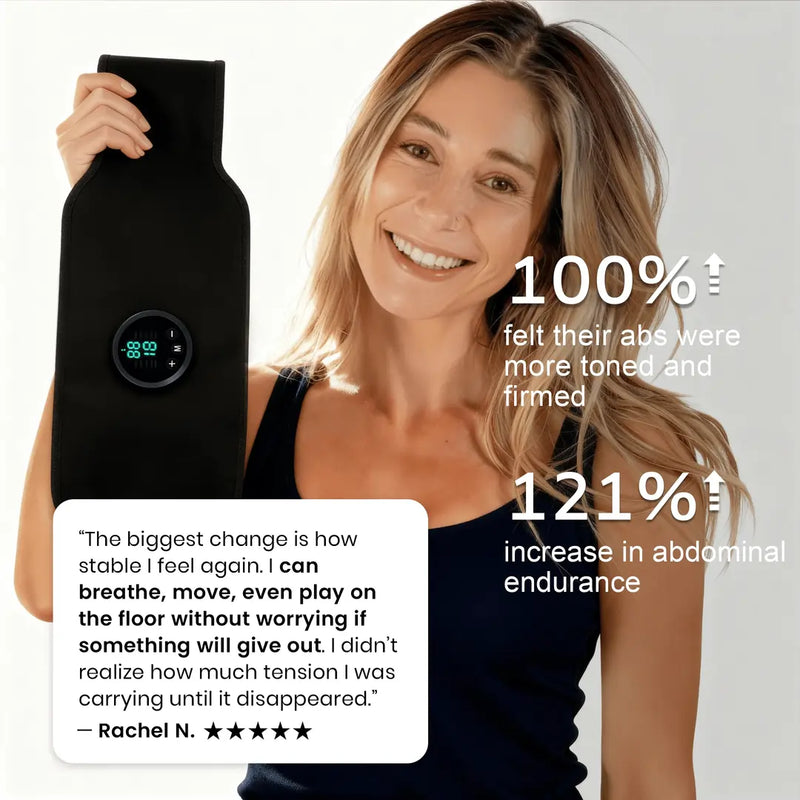
145,000+ units sold. 400+ clinicians recommend it. The same core NMES technology was clinically shown to increase muscle strength by 40%.
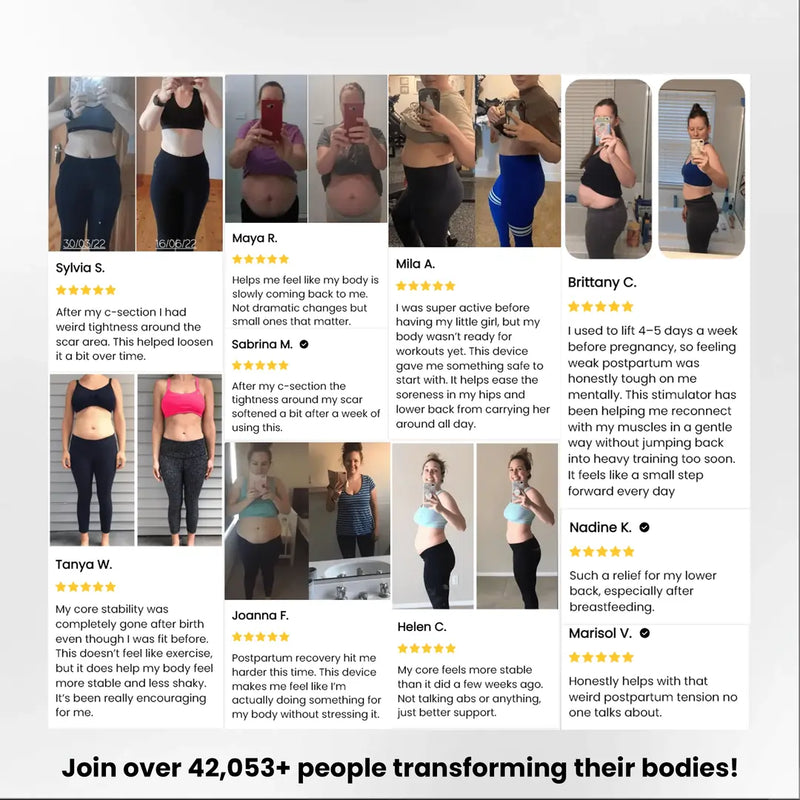
But don't take the science alone — here's what real users are saying:
“I recommend this product and this company. I can see my abs getting tighter and my ab muscles are beginning to pop after just two weeks of use. Thank you Ape Born!”
“After six months of using this Stimulator along with a balanced diet, I can honestly say this little device has exceeded my expectations. I've been using it almost daily, mainly on my arms and core, and the results are noticeable!”
“This is my 8 months journey while hitting the gym along with using these stimulators. The best part is it has velcro straps and not the gel pads like others. It surely is expensive than other machines out there but is worth the price.”
Try the Technology Risk-Free for 60 Days
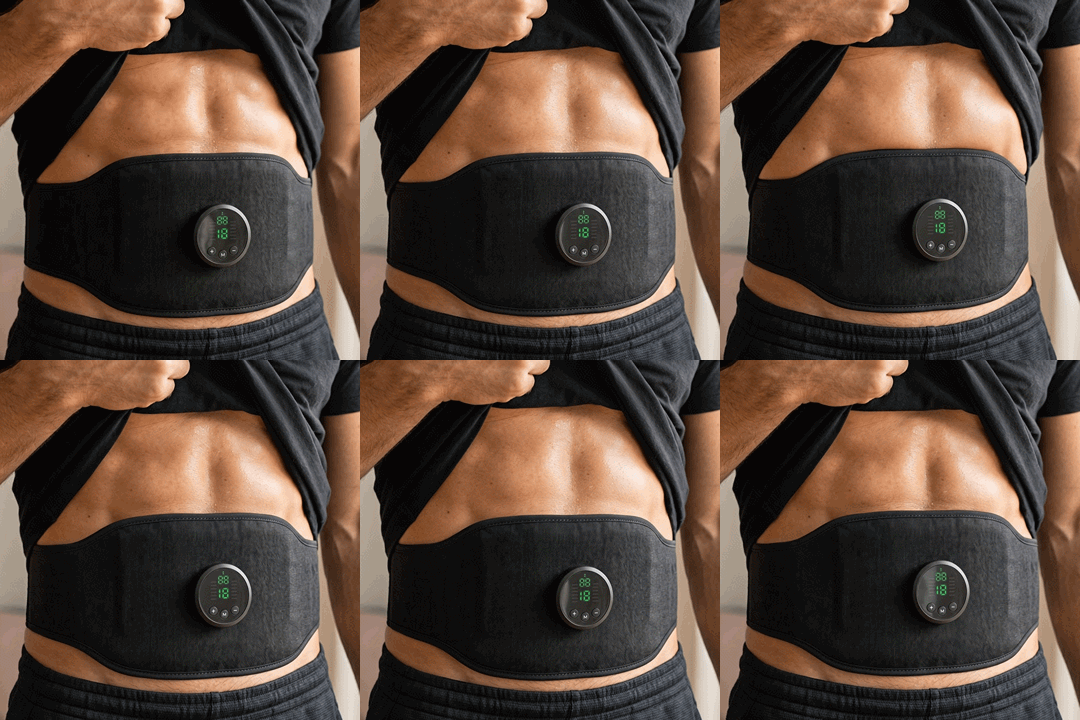
The clinical NMES technology that increases muscle strength by 40% — the same mechanism that was locked inside rehab clinics while you were told to "just accept it" — is now available for home use. Across your core, arms, and legs. One system. FDA-cleared. No gel pads. No appointments. No per-session, per-zone charges.
94% of users see visible toning within 60 days. If you don't, send it back. Full refund. No questions.
The Ultra Full Body Kit sells exclusively through apebornfitness.com and sells out regularly.
Where Can I Get the Ultra Full Body Kit?
If this story connected some dots for you, here's the last practical piece.
The Ultra Full Body Kit is sold only by APE BORN, and you can order it right on this page. Every button here takes you straight to the order section below, where you pick your quantity and check out directly.